![[Bevan Baas]](http://www.ece.ucdavis.edu/~bbaas/pics/Baas_Bevan_0001small.144x203.jpg)
| Quarter | Course | ||
| Fall 2026 | EEC 116 | VLSI Design | Final Project winners and results |
| Winter 2027 | EEC 180 | Digital Systems II | |
| Winter 2027 | EEC 281 | VLSI Digital Signal Processing | |
| Spring 2027 | EEC 180 | Digital Systems II | |
From 1987–89, he served as a new product engineer working on the processor for a high-end minicomputer in Hewlett Packard's Computer Systems Division, Cupertino, CA. In early 1999, he joined Atheros Communications [wikipedia] as the second full-time employee after the founders and served as a core member of the team which developed the first IEEE 802.11a (54 Mbps, 5 GHz) Wi-Fi wireless LAN solution. The chipset began shipping in volume in September of 2001 and for one and a half years was the only shipping 802.11a chipset [ISSCC 2002]. Atheros became a publicly-held company in Feb. of 2004 and was purchased by Qualcomm in 2011. In 2003, Dr. Baas joined the Department of Electrical and Computer Engineering at the University of California, Davis as an Assistant Professor. He became an Associate Professor in 2008, and a full Professor in 2015.
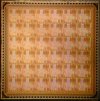 Dr. Baas has published over 100 peer-reviewed papers in the areas of
algorithms, applications, architectures, arithmetic, circuits, VLSI design,
and software tools for high-performance, energy-efficient, and area-efficient
computation with consideration of the challenges and opportunities of
future fabrication technologies. He is interested in both programmable and
special-purpose processors with an emphasis on DSP, neural network,
multimedia, and embedded workloads with recent projects targeting datacenter
and scientific workloads. Projects include the
AsAP
(Asynchronous Array of simple Processors) programmable array processor
chips
(36 processors,
167 processors,
1000
processors),
applications, and tools;
Low Density Parity Check (LDPC) decoders;
Fast Fourier Transform (FFT) processors;
viterbi decoders;
Advanced Encryption Standard (AES) ciphers;
Synthetic Aperture Radar (SAR);
H.264 video codecs;
Display Stream Compression (DSC) codecs;
sorting and string-search engines;
and
machine learning engines.
His group is one of very few university groups in the world that
design and fabricate programmable (and configurable special-purpose)
processor chips. They have designed what are believed to be the
#1, #3, and #8 highest clock rate fabricated
processors, and among the largest deep-submicron
processor
chips ever designed in a university.
Dr. Baas has published over 100 peer-reviewed papers in the areas of
algorithms, applications, architectures, arithmetic, circuits, VLSI design,
and software tools for high-performance, energy-efficient, and area-efficient
computation with consideration of the challenges and opportunities of
future fabrication technologies. He is interested in both programmable and
special-purpose processors with an emphasis on DSP, neural network,
multimedia, and embedded workloads with recent projects targeting datacenter
and scientific workloads. Projects include the
AsAP
(Asynchronous Array of simple Processors) programmable array processor
chips
(36 processors,
167 processors,
1000
processors),
applications, and tools;
Low Density Parity Check (LDPC) decoders;
Fast Fourier Transform (FFT) processors;
viterbi decoders;
Advanced Encryption Standard (AES) ciphers;
Synthetic Aperture Radar (SAR);
H.264 video codecs;
Display Stream Compression (DSC) codecs;
sorting and string-search engines;
and
machine learning engines.
His group is one of very few university groups in the world that
design and fabricate programmable (and configurable special-purpose)
processor chips. They have designed what are believed to be the
#1, #3, and #8 highest clock rate fabricated
processors, and among the largest deep-submicron
processor
chips ever designed in a university.
From 2016–19 he was an Associate Editor for the IEEE Transactions on Circuits and Systems II. From 2016–19 he was an Associate Editor for the IEEE Transactions on VLSI Systems. From 2007–12 he was an Associate Editor for the IEEE Journal of Solid-State Circuits. • He served as Guest Editor of the Journal of Signal Processing Systems, 2019; IEEE Micro, March 2012; and IEEE Design & Test of Computers, January 2013. • He was a Visiting Professor at the University of Sydney in 2015–16; the National University of Singapore in 2016; ST Microelectronics R&D, Crolles, France in 2016; and Intel's Circuit Research Lab, Hillsboro, Oregon in 2006.
He served and is serving as: Awards Committee Chair of the IEEE International Symposium on Embedded Multicore/Many-Core Systems-on-Chip (MCSoC) 2026; Industrial Liaison Chair of the IEEE Workshop on Signal Processing Systems (SiPS) 2018; Track Program Co-Chair of the IEEE Conference on Dependable and Secure Computing 2017; Program Committee Co-Chair of the IEEE HotChips Symposium on High-Performance Chips 2011; Parallel Architecture Co-Chair of the Design Automation Conference (DAC) 2011 Workshop on Parallel Algorithms, Programming, and Architectures; • Technical Program Committee member of the IEEE International Symposium on Communications and Information Technologies (ISCIT) 2025; Technical Program Committee member of the IEEE/IFIP International Conference on Very Large Scale Integration (VLSI-SoC) 2014, 2022, 2023, 2024, 2025; Technical Program Committee member of the IEEE International Conference on Omni-Layer Intelligent Systems (COINS), 2019, 2022, 2023, 2024, 2025; Technical Program Committee member of the IEEE Asia Pacific Conference on Circuits and Systems (APCCAS), 2020, 2021; Technical Program Committee member of the IEEE International Symposium on Embedded Multicore/Many-core Systems on-Chip (MCSoC), 2019, 2020, 2022, 2023, 2024, 2025, 2026; Technical Program Committee member of the IEEE S3S (SOI-3D-Subthreshold) Conference, 2019; Technical Program Committee member of the IEEE International Conference on Omni-layer Intelligent Systems 2019; Program Committee member of the IEEE/ACM International Workshop on Network on Chip Architectures (NoCArc) 2018, 2019; Technical Program Committee member of the IEEE International Conference on ASIC (ASICON) 2017; Program Committee member of the IEEE/ACM International Workshop on Network on Chip Architectures (NoCArc) 2016, 2017; Committee member of the IEEE International Solid-State Circuits Conference (ISSCC) Student Research Preview 2012, 2013, 2014; Program Committee member of the IEEE HotChips Symposium on High-Performance Chips 2009, 2010; Technical Program Committee member of the IEEE International Symposium on Asynchronous Circuits and Systems (ASYNC) 2010; Technical Program Committee member of the International Conference on Computer Design (ICCD) 2004, 2005, 2007, 2008, 2009; • a member of the AISES Academic Advisory Council, and the original Technical Advisory Board of Soft Machines Inc. 2006–2016. He is a member of Tau Beta Pi, Phi Kappa Phi, Eta Kappa Nu, AISES, and a Senior Member of the IEEE.
My university web page. A short bio, and a slightly longer bio which are not kept up to date.
 VLSI Computation Lab
(VCL) home page
VLSI Computation Lab
(VCL) home page
Research Interests
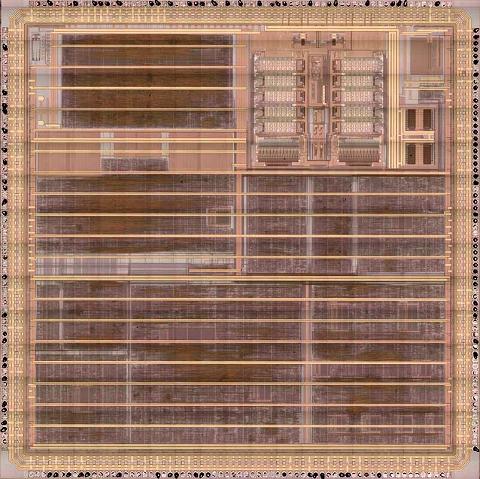
Dissertation, February 1999
"An Approach to Low-Power, High-Performance,
Fast Fourier Transform Processor Design."
Design of the baseband transmitter, parts of the receiver, and
some system-level blocks in an 802.11a wireless LAN (54 Mbps, 5 GHz) at
Atheros Comunications
SPIFFEE: an energy-efficient single-chip 1024-point FFT processor.
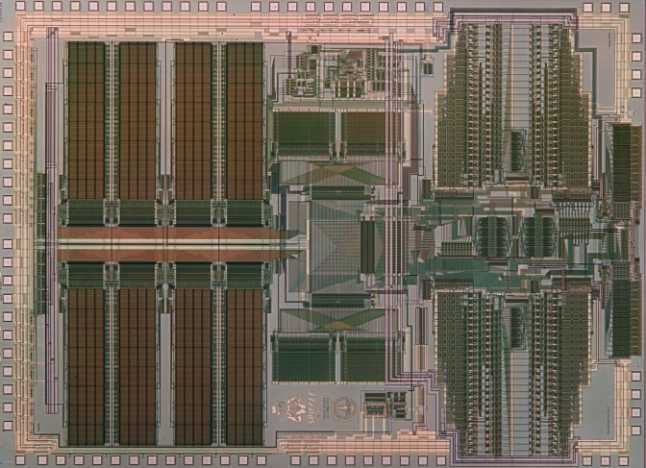
This work was supported by NSF, NASA-GSRP, and AISES-GE fellowships.


